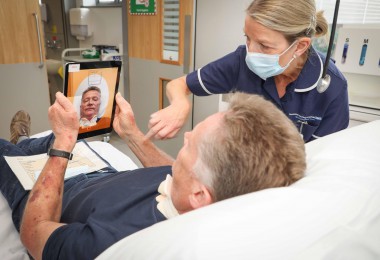
Patients are leaving healthcare appointments unable to remember what they have been told or unsure how to manage their treatment, a new report warns.
The white paper from UK digital health company Aide Health says unanswered questions about care can add to patients’ anxiety and contribute to repeat calls, people stopping their medicines and avoidable hospital visits.Uncertainty is a treatable condition describes this build-up of unanswered questions as “uncertainty debt” and calls for patients to be given clearer information they can return to after an appointment.
Its authors argue that while some uncertainty is an unavoidable part of illness, many of the questions patients take home already have answers within the healthcare system. They are calling for clearer information, better checks on patients’ understanding and more ways for people to revisit what was discussed.The paper brings together published research on how much information patients retain and understand:
• Patients may forget between 40% and 80% of the information they are given during a consultation, while almost half of what they do remember may be inaccurate.¹
• In a study of 140 patients across two US health systems, 78% misunderstood at least one aspect of their emergency department care or instructions.²
• A Dutch emergency department study found that asking patients to explain discharge information back to a nurse reduced the proportion leaving with a comprehension gap from 49% to 11.9%. The conversation added an average of one minute and 39 seconds.³
The authors say information gaps can emerge at every stage of care, from an unexplained wait in A&E to a question about a new medicine that only arises once a patient has returned home.
Ian Wharton, founder of Aide Health and co-author of the paper, said:“Patients are often expected to take in complex information at a time when they may be frightened, in pain or trying to come to terms with a diagnosis. It is hardly surprising that questions arise later or that details are forgotten.“Some uncertainty in medicine cannot be removed. But when a patient does not know what their medicine is for, what was said in their appointment or who to contact if they get worse, that is a gap we can do something about.“We need to make sure people leave care with information they can understand and return to when they need it. That could make a real difference to patients’ confidence and help prevent problems from escalating.”
The paper draws on research from healthcare, neuroscience, aviation, transport and other sectors to explore how information can reduce uncertainty.
It calls for healthcare services to explain waits, check patients’ understanding, make clear who is responsible for the next step and be open about what is not yet known.
The authors also call for further research into the impact and cost of information gaps, and the effectiveness of approaches to addressing them.
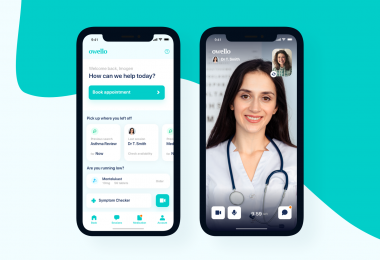
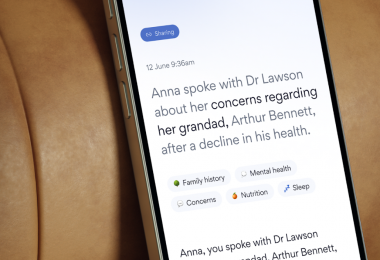
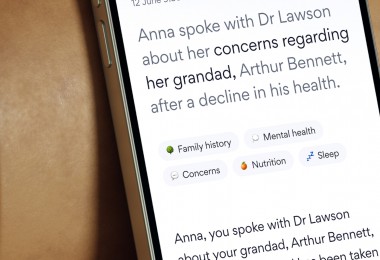
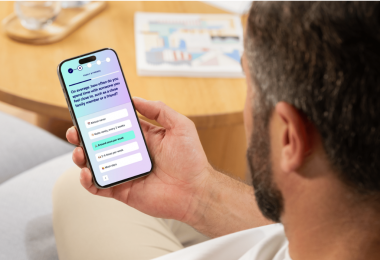
Giving patients a medical memoryAide Health is seeking to address part of the problem through Mirror, its patient-facing AI note-taker, launched in October 2025.
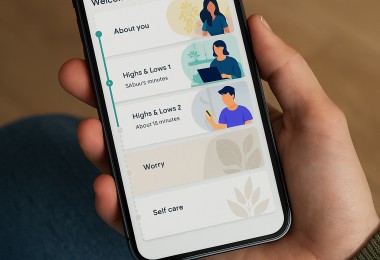
Mirror captures healthcare consultations and turns them into a plain-English summary that patients can revisit and securely share with family members or carers.
It is designed to help people remember what was discussed and understand what happens next.
One patient who used Mirror while navigating a prostate cancer diagnosis said:“When you’re dealing with challenging medical information, it can be confusing.
You’re trying to absorb complicated information while also dealing with everything you’re feeling emotionally. Having a record you can go back to makes an enormous difference.“
The way it captured the different parts of the consultation and arranged the information was amazing. It made it so much easier to understand what we’d actually discussed.”The white paper recognises that AI-generated summaries can contain errors and says users must be made aware of the technology’s limitations.
It also calls for information to be accessible to people with different levels of health literacy and digital access, with non-digital options available for those who need them.
Uncertainty is a treatable condition was written by Ian Wharton, Nick Barber, PhD, and Dr Steven Laitner and is available at https://aide.health/white-papers